Respond safely and limit additional damage
Stay away from standing water near electrical sources, sagging ceilings, contaminated water, and structurally unstable areas. For an active supply leak, use a shutoff only if it is safe and you know how. Contact emergency services or qualified utility and restoration professionals when hazards are present. Reasonable temporary steps may limit further damage, but do not put yourself at risk.
Start the homeowners insurance claim
Contact the insurer or agent promptly and ask for the claim number, adjuster contact, policy requirements, deductible, and instructions for emergency work. Ask what documentation and approvals are needed before discarding damaged property or starting permanent repairs. A contractor can document construction conditions and estimate repairs, but only the insurer and policy determine coverage.
Document the loss and decisions
Photograph or video affected rooms, the apparent water source, visible damage, and damaged personal property before items are moved when safe to do so. Keep an inventory, receipts, moisture reports, estimates, invoices, emails, and notes from calls. Save material samples only when requested and safe. Clear records help the homeowner, adjuster, mitigation team, and reconstruction contractor understand what happened.
Mitigate, remove, and dry
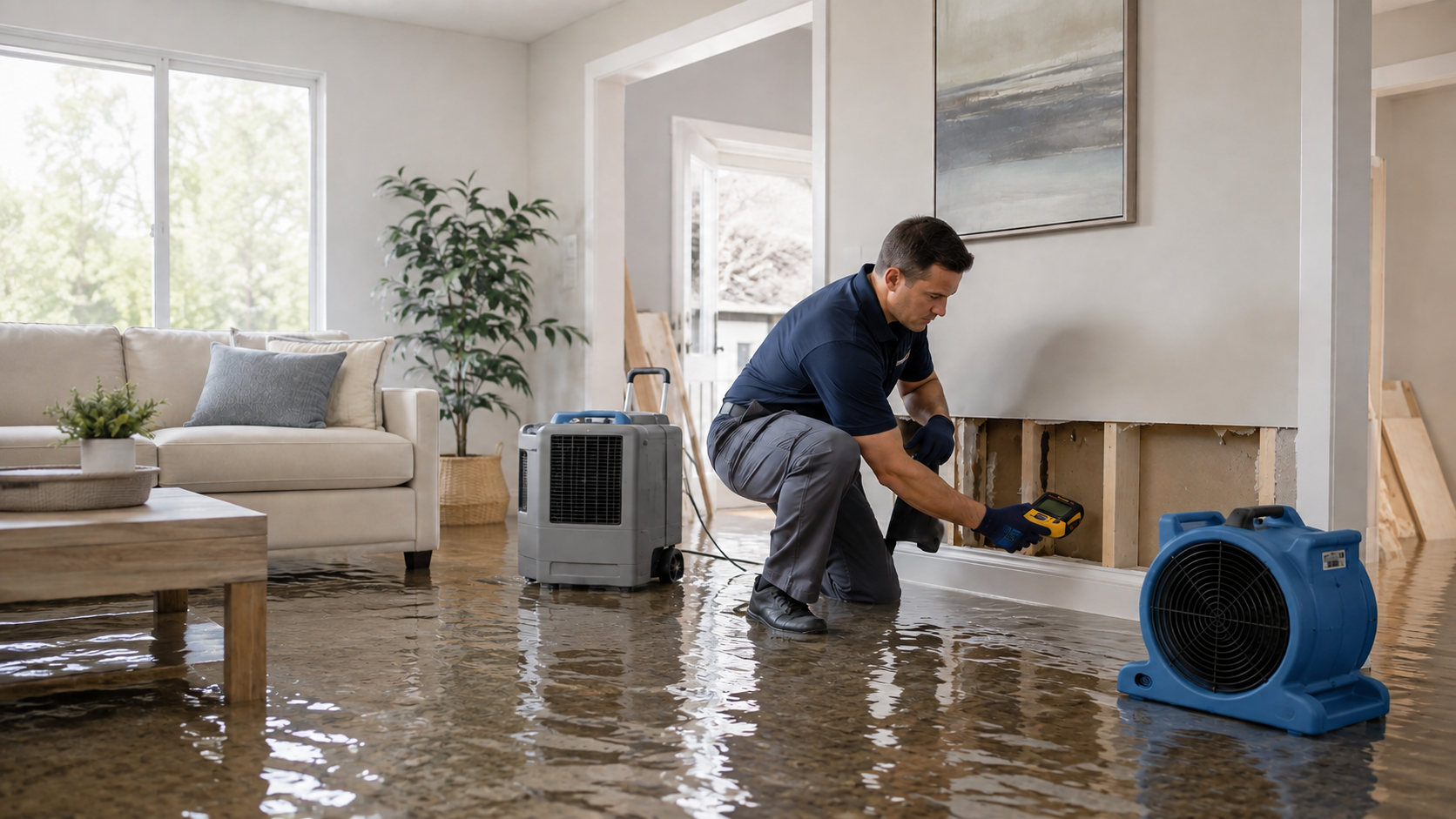
Mitigation addresses immediate damage and helps prevent conditions from worsening. Depending on the water source, exposure time, materials, and contamination, work may include extraction, controlled removal of unsalvageable materials, cleaning, air movement, dehumidification, and moisture monitoring. Drying equipment should be sized and operated by qualified professionals, and the affected assemblies should reach appropriate drying goals before they are closed.
Move from mitigation to reconstruction
Mitigation and reconstruction are distinct scopes. Reconstruction may include framing or subfloor repair, insulation, drywall, trim, cabinetry, flooring, painting, plumbing fixtures, and other finishes. The written proposal should distinguish covered repairs, homeowner-selected upgrades, allowances, code-related work, exclusions, and change procedures. Confirm who coordinates permits and inspections when required.
Complete verification and the final walkthrough
Before finishes conceal the assemblies, confirm that the water source was corrected and review available drying documentation. During the final walkthrough, test affected fixtures and doors, inspect transitions and finishes, record remaining items, and collect product care or warranty information. Keep claim and project records after completion.
Frequently asked questions
Will homeowners insurance cover every water loss?
No general answer applies. Coverage depends on the policy, exclusions, endorsements, cause, timing, and facts of the loss. Ask the insurer or a qualified insurance professional to explain the specific policy.
Should reconstruction begin before the home is dry?
Damaged assemblies should be evaluated and appropriate drying goals reached before they are enclosed. Rebuilding too soon can trap moisture and damage new materials.
Can I choose my reconstruction contractor?
Selection rights and claim procedures can vary. Ask the insurer about the policy and process, then compare contractors based on a complete written scope, communication, qualifications, and reconstruction experience.
Plan water-damage reconstruction in Central Kentucky
Cave Ridge Construction can discuss reconstruction after a water loss. For a project-specific conversation, call Cave Ridge Construction at 270-579-9224.
Call Cave Ridge Construction